What Output Can You Expect?
In addition to rated electrical power generation, a typical 1 MWe system also delivers approximately 1.8 MW of usable process heat. This recovered heat is sourced from multiple points, including generator set exhaust (around 550°C), engine radiator (approximately 75°C), and gas cooling processes.
This thermal energy can be efficiently utilized for a wide range of applications such as district heating systems, wood chip drying, agricultural crop drying, greenhouse heating, and other industrial heat requirements, significantly improving overall system efficiency and energy utilization.
-
What Else Will You Need to Operate the System?
Electric Power:
At start-up, a source of 3-phase electricity (grid supply or a small diesel/gas generator set) is required to power the electrical control and data systems, as well as the start-up blower.Water Supply:
The system requires a small quantity of clean water for operation. -
What Are the Economic Benefits of an Omnignx Project for You?
Omnignx gasification plants address two major local challenges: waste management and energy costs. By converting locally available feedstock into usable energy, you can significantly reduce operational expenses while also creating new revenue opportunities, such as selling excess electricity back to the grid.
Energy produced through Omnignx gasification is renewable and may qualify for local government incentives and renewable energy support programs. This circular economy model not only improves energy independence but also contributes to local job creation and long-term economic sustainability.
-
Can OmniGNX Help with Tar-Related Operational Issues in My Gasification Plant?
OmniGNX does not provide troubleshooting or expert services for plants based on third-party technologies. However, we can evaluate whether our gasification systems or gas purification solutions can replace your existing setup to improve performance and reliability.
In most cases, we recommend upgrading both the gasifier and the gas conditioning unit to ensure optimal efficiency and reduced tar-related issues. In certain situations, additional modifications may be required, including adjustments to the engine system and biomass preparation units, to achieve full system compatibility and stable operation.
-
Is Biomass Gasification a New Technology?
Biomass gasification is not a new technology. The process has been in use for over 180 years. Before the widespread adoption of natural gas in the 1950s, coal gasification was commonly used to produce fuel gas for applications such as city street lighting.
With the rise of inexpensive petroleum-based energy sources, further development of gasification technologies slowed for several decades. However, during the oil crisis of the 1970s, interest in biomass gasification was revived, leading to renewed research and advancements in sustainable energy production.
-
What Makes Biomass Gasification Environmentally Friendly?
Biomass is organic material, and biomass energy focuses on converting waste that would otherwise be discarded into useful energy. OmniGNX gasification technology enables businesses and industries to utilize their own waste streams—such as pallets, packaging boxes, paper, or agricultural residues from farming, milling, and ranching—as a clean energy source.
Our technology captures the stored energy within this biomass and efficiently converts it into useful outputs such as heat, electricity, and even cooling through Combined Heat and Power (CHP) systems. This not only reduces waste disposal needs but also supports cleaner energy production and a more sustainable, circular approach to resource use.
-
What Are the Benefits to Local Economies from OmniGNX Projects?
OmniGNX projects generate significant economic value for local communities by creating dozens—and in many cases, hundreds—of employment opportunities during plant development and operation.
Jobs are created across multiple sectors, including construction, agriculture, feedstock collection and transportation, biomass preparation, and long-term plant operations and maintenance. Since many of these projects are implemented in rural and semi-urban regions, they provide meaningful economic stimulation, improve local livelihoods, and contribute to overall regional development.
-
What Can the Gas Produced in the Gasifier Be Used For?
The producer gas generated by the gasifier can be utilized for a wide range of energy applications. By operating the system in forced draft (positive pressure) mode, the gas can be directly supplied to a burner in a boiler to produce steam for power generation through a turbine.
Alternatively, it can be used to fuel internal combustion engines for direct electricity generation. This flexibility makes the gas suitable for both thermal and electrical energy applications, depending on operational requirements.
-
What Is in the Gas That Comes Out of the Gasifier?
The gas produced by a gasifier, known as syngas, primarily consists of carbon monoxide (CO), hydrogen (H₂), and nitrogen (N₂). The combustible components—carbon monoxide and hydrogen—are responsible for the energy content of the gas.
Syngas functions similarly to natural gas, although it has a lower energy density. It serves as an efficient medium for transferring the energy stored in biomass feedstock into usable power for applications such as steam turbines and generator sets.
Once cleaned, the syngas is supplied to turbines or gas engines for combustion. The resulting exhaust gases are then treated using advanced emission control systems to ensure compliance with air quality standards and reliable environmental performance.
-
What’s the Advantage of Biomass Gasification Over Biofuel Production?
OmniGNX gasification technology supports a highly flexible and diverse feedstock base, allowing a wide range of biomass materials to be used instead of relying on monoculture energy crops. This makes it a more sustainable and resource-efficient solution compared to many biofuel production methods.
While syngas has a lower energy density compared to liquid biofuels, it is particularly well-suited for stationary power applications such as heat and electricity generation rather than transportation.
Biomass-based energy systems are generally considered carbon-neutral, as the CO₂ released during gasification is offset by the CO₂ absorbed during biomass growth. Compared to other biofuel technologies like biogas (from landfill sources) and biodiesel (from agricultural inputs), gasification offers greater fuel flexibility and the ability to produce multiple forms of usable energy, including heat and power.
-
Why Do We Need Biomass Gasification Now?
Biomass gasification is a clean, cost-effective, and environmentally sustainable renewable energy solution that addresses the growing challenges of agricultural and forestry residue management.
In addition to waste utilization, energy security has become a major global concern. Governments and industries are increasingly focused on using local resources to achieve greater energy independence and reduce reliance on imported fuels.
By converting locally available biomass into usable energy, gasification helps reduce dependency on external energy suppliers, strengthens energy resilience, and supports a more sustainable and self-sufficient energy future.
-
Why Do We Need Biomass Gasification for Renewable Energy When We Already Have Wind and Solar?
Wind and solar power are essential components of the future energy mix due to their low maintenance requirements and minimal greenhouse gas emissions. Solar energy is particularly effective for meeting peak daytime demand, while wind energy—when distributed across a well-connected grid—can contribute significantly to base-load generation.
However, both wind and solar are inherently intermittent and cannot consistently provide on-demand power for load balancing. This challenge is especially critical in remote or “islanded” power systems where grid interconnection is limited or unavailable.
Biomass gasification addresses this gap by providing reliable, dispatchable energy that can operate 24 hours a day, 7 days a week. When fueled by sustainably sourced biomass, it offers a truly carbon-neutral solution that complements wind and solar, ensuring stable and continuous renewable power generation within a fully integrated clean energy system.
-
Do OmniGNX Gasification Systems Pollute? What Are the Byproducts?
OmniGNX gasification systems are designed to maximize clean energy production while minimizing environmental impact. The primary output of the process is syngas, with very limited byproducts.
1. Solid Byproducts & Resource Recovery
The gasification of biomass produces syngas as the main product, along with small quantities of biochar (low-grade activated carbon) and inert ash. These byproducts can ideally be combined and returned to the soil as a natural soil conditioner, supporting carbon sequestration and nutrient recycling. Biochar also helps improve soil quality and can reduce the need for chemical fertilizers, improving agricultural sustainability and economics. Additionally, waste heat generated during the process can be utilized for heating, cooling, industrial processes, or pre-drying biomass fuel.
2. Moisture Formation
A small amount of water is produced during gasification reactions, typically present as water vapor at the gasifier outlet. When syngas is cooled for applications such as engine use, this moisture condenses within the gas conditioning system.
3. Tar Management & Reuse
Any tar separated through OmniGNX’s electrostatic precipitator (ESP) can be reintroduced into the system as fuel or recycled back into the reactor for further conversion, improving overall efficiency and reducing waste.
4. Emissions Control
When syngas is used in internal combustion engines, it is fully combusted for power generation. Post-combustion emissions are treated using standard engine-based emission control systems and catalytic converters, ensuring compliance with required environmental standards.
-
Is This an Incinerator?
No. OmniGNX gasification systems are not incinerators. Instead of burning biomass for disposal, the system thermochemically converts it into syngas by heating the fuel in a controlled environment with limited oxygen.
The produced syngas is then used as a clean fuel source for energy generation—either in internal combustion engines to produce electricity or in gas-fired boilers to generate steam and other thermal energy applications. It can also replace conventional fuels such as LPG or natural gas in suitable systems.
Unlike incineration, the purpose of gasification is not waste disposal, but efficient energy recovery from biomass resources.
-
How Does OmniGNX Gasification Compare with Other Technologies?
OmniGNX offers a fully integrated and advanced biomass gasification solution designed for high efficiency, reliability, and global scalability.
1. Complete End-to-End System
OmniGNX manufactures complete gasification power generation systems, including gasifiers, gas purification units, and gas generator sets, ensuring seamless integration and optimized performance across the entire process.
2. Proven Experience
With nearly 30 years of industry experience and over 100 global installations, OmniGNX designs are field-tested and continuously improved based on real-world operational feedback.
3. Multiple Gasifier Technologies
OmniGNX has developed more than 10 gasifier designs tailored to different feedstocks and applications, ensuring the most suitable and efficient solution for each project requirement.
4. Advanced Gas Cleaning Technology
Our gas cooler and high-voltage electrostatic precipitator (ESP) system produce clean, tar-free syngas. This enables compatibility with 100% syngas engines and dual-fuel engines without risks of engine fouling.
5. Robust Power Generation Systems
OmniGNX supplies heavy-duty gas generator sets operating in the 500–1200 RPM range, designed for continuous 24/7 industrial power plant operation.
6. Modular & Compact Design
The modular architecture reduces footprint, minimizes civil works, and enables fast deployment. Systems are easily installed near biomass sources, reducing transportation costs and improving overall project economics.
7. Highly Scalable & Flexible Solution
OmniGNX systems are designed to scale with biomass availability and energy demand. They efficiently utilize agricultural waste, forestry residues, and fast-growing energy crops, including C4 grasses. Systems are optimized for carbon neutrality and can be deployed on marginal lands, reducing competition with food agriculture. The entire system can be shipped in a 40-foot high cube container, enabling global deployment with minimal logistics complexity.
8. Waste Heat Utilization (CHP Integration)
Waste heat from generators is recovered and used for biomass drying and conditioning, enabling Combined Heat and Power (CHP) efficiency. The heat can also be utilized for wood kilns, cooking applications, and other industrial heating needs.
9. Automation & Control
The OmniGNX system is fully automated, capable of controlling the entire plant through integrated hardware and advanced software systems, ensuring efficient and reliable operation.
10. Training & Global Support
OmniGNX operates its own 5MW biomass gasification power plant for demonstration and training purposes. Customers can send engineers for hands-on training in China, while OmniGNX also provides global on-site operation and maintenance support through experienced engineers and technicians.
-
What Is the Maximum Moisture Content of the Biomass?
OmniGNX gasification systems are designed to handle a wide range of biomass moisture levels depending on the technology type:
- UFBG: Feedstock moisture content from 5% to 60%
- CFBG: Feedstock moisture content below 16%
- DFBG: Feedstock moisture content below 20%
- TFBG: Feedstock moisture content below 20%
In cases where biomass has higher moisture content (up to 65% wet basis), a biomass drying system can be integrated into the plant design. This dryer is powered using recovered thermal energy from the system, ensuring efficient energy utilization.
The selection and integration of a suitable biomass dryer is included as part of our complete project offering.
-
What Is the Difference Between Ashes and Biochar?
Thermal conversion of biomass produces solid byproducts that contain varying amounts of mineral matter and carbon.
Ashes are the solid residue left after complete combustion of biomass feedstock. They primarily consist of inorganic mineral matter originally present in the biomass, with almost no remaining carbon content.
Biochar, on the other hand, is produced during the gasification process. Unlike complete combustion, gasification occurs under limited oxygen conditions, meaning the resulting solid residue still contains a significant amount of fixed carbon along with mineral matter.
-
Why Does OmniGNX Offer Four Different Gasifier Technologies?
OmniGNX believes that no single gasifier design can efficiently handle all types of biomass, waste, or coal. Different feedstocks have varying characteristics, requiring specialized technologies for optimal performance.
For this reason, OmniGNX offers multiple gasifier configurations, each designed for specific applications and fuel types. This ensures higher efficiency, better reliability, and improved adaptability across a wide range of industrial energy requirements.
-
What Do CFCG, DFCG, SSCG, and DSCG Mean?
- CFCG – Circulating Fluidized-Bed Coal Gasifier
- DFCG – Double-Fire Fixed-Bed Coal Gasifier
- SSCG – Single Stage Coal Gasifier
- DSCG – Double Stage Coal Gasifier
-
About Our Technology & Solutions
What Do CFBG, DFBG, UFBG, and TFBG Mean?
- CFBG – Circulating Fluidized-Bed Biomass Gasifier
- DFBG – Downdraft Fixed-Bed Biomass Gasifier
- UFBG – Updraft Fixed-Bed Biomass Gasifier
- TFBG – Twin-Fire Fixed-Bed Biomass Gasifier
-
Can I Represent OmniGNX in My Territory?
OmniGNX works with a network of qualified agents and commercial partners who have experience in the waste management and energy sectors.
We are always open to exploring new partnerships in emerging territories. If you are developing projects in your region or are interested in representing OmniGNX, we welcome you to get in touch with us to discuss potential collaboration opportunities.
-
Can I Tour a Site?
Yes. OmniGNX operates its own test facility that generates electricity from biomass and waste within our factory environment. This site is used to develop and evaluate new technologies, as well as to test a wide range of biomass feedstocks for customer applications.
Additionally, depending on project requirements and availability, we can also arrange visits to selected customer operating sites, subject to their approval.
-
Can OmniGNX Gasify My Solid Biofuel?
Yes. OmniGNX designs, engineers, and implements tailored solutions for a wide range of biomass residues and solid biofuels.
Each project is carefully evaluated to match the most suitable gasification technology for the specific fuel type and application, ensuring optimal performance and efficiency.
With extensive global experience, OmniGNX has successfully gasified more biomass feedstock than most other gasification technologies combined, demonstrating proven reliability across diverse operating conditions.
-
Will OmniGNX Work with My Local Contractors to Design the Entire Site?
Yes. OmniGNX offers this as a structured service under a clearly defined scope of work.
We typically handle the design and engineering of all key plant components, while local EPC (Engineering, Procurement, and Construction) partners manage site-specific responsibilities such as civil structures, permitting, and construction activities.
This collaborative approach ensures smooth project execution while combining OmniGNX’s technical expertise with local implementation capabilities.
-
Do You Provide Project Financial Feasibility Studies?
Yes. OmniGNX provides detailed project financial feasibility studies in collaboration with clients.
Our team develops comprehensive financial models to evaluate project viability, investment returns, and operational economics. This service is offered as a paid upfront engagement, with a portion of the cost typically rebated upon project order confirmation.
-
Why Are OmniGNX Projects Considered Carbon Neutral?
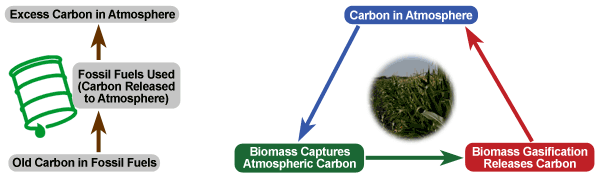
All forms of biomass energy conversion—whether through direct combustion or indirect processes such as gasification—produce carbon dioxide (CO₂) emissions. However, when biomass is sourced sustainably and continuously regrown, the overall carbon cycle remains balanced.
During growth, biomass absorbs CO₂ from the atmosphere and converts it into plant material while releasing oxygen. When this biomass is later used for energy production, the same amount of CO₂ is released back into the atmosphere, meaning no additional net carbon is added to the environment.
In contrast to fossil fuels, where carbon has been stored underground for millions of years and released into the atmosphere upon use, biomass energy operates within a short, natural carbon cycle. As a result, OmniGNX projects are considered carbon neutral, since the CO₂ emitted during energy generation is offset by the CO₂ absorbed during biomass growth.
-
Can OmniGNX Install the System in My Country?
Yes. OmniGNX can deploy experienced engineers to supervise the erection, installation, and commissioning of the system at your site. Our team also provides on-site training for your operating personnel to ensure smooth and efficient plant operation.
All travel-related expenses, including international and domestic transportation, local travel, and accommodation, are borne by the client. In addition, an on-site service charge applies for OmniGNX engineers.
-
How Long Does It Take to Complete a New OmniGNX Project?
On average, project construction takes approximately 3 to 6 months, depending on site conditions and scope of work. This timeline is primarily enabled by the modular design of the system, which allows for faster deployment and easier installation once financing and necessary permits are in place.
-
How Are OmniGNX Gasifier Power Generation Systems Shipped?
All OmniGNX systems are shipped in high-cube cargo containers or smaller modular units. In some cases, larger modules may require flat-rack (FR) or open-top containers depending on size and configuration.
During commissioning, the system is reassembled on-site under the supervision of OmniGNX personnel. This phase also includes operator training to ensure proper handling, safe operation, and efficient plant performance.
-
What Is the Useful Life of the OmniGNX Gasifier Power Generation System?
The OmniGNX gasifier power generation system is designed for long-term industrial use, with a typical operational lifespan of more than 20 years, depending on proper maintenance and operating conditions.
-
What Is the Warranty of the Gasifier?
The OmniGNX gasifier system comes with a one-year warranty, excluding consumable components.
-
Who Handles the Commissioning of My Plant?
OmniGNX is responsible for the commissioning of the gasifiers and gas generator sets at the site. Our team ensures complete hardware and software integration for smooth and reliable operation.
Depending on customer requirements, we can also support the commissioning of balance-of-plant systems to ensure full plant readiness and optimized performance.
-
How Do I Get Aftermarket Sales, Service, and Operational Support?
OmniGNX provides comprehensive aftermarket support through our global network of partners and service teams, ensuring reliable assistance for sales, maintenance, and day-to-day operational needs
-
Will OmniGNX Assist My EPC in Designing the Plant?
Yes. OmniGNX offers engineering support services to assist EPC contractors in designing and integrating the plant. This ensures proper alignment with system requirements, optimized performance, and smooth project execution.
-
What If I Have Grass or Other Non-Densified Biomass Material?
If non-densified biomass such as grass or similar loose materials is used, it must be pre-processed before entering the system.
For fixed-bed gasifiers, the biomass should be converted into a densified form using a cubing machine to ensure proper fuel consistency and stable operation. Alternatively, for fluidized-bed gasifier systems, the material must be crushed into a uniform, fine particle size suitable for efficient processing.
Proper fuel preparation is essential to ensure optimal performance, reliability, and efficiency of the gasification system.
-
Why Does OmniGNX Focus on Biomass as a Feedstock?
Biomass is one of the most abundant and widely available renewable energy resources in the world. In many regions, it is often referred to as the “Saudi Arabia of Biomass” due to its vast and untapped potential.
Utilizing biomass not only provides a sustainable energy source but also helps address multiple environmental challenges. Agricultural, forestry, and industrial wood waste can be effectively converted into energy, reducing landfill use and preventing unnecessary waste accumulation. Additionally, forest residue management helps lower the risk of wildfires by clearing dead trees and excess undergrowth, while also reducing greenhouse gas emissions.
Biomass energy systems can also support rural economies by creating opportunities for farmers through the cultivation of energy crops. These non-food crops provide an additional revenue stream and contribute to local economic development.
As one of the oldest known energy sources used by humanity, biomass remains a reliable and sustainable foundation for modern renewable energy systems.
-
How Much Biomass Is Required?
The required amount of biomass depends on its type and density. Lighter feedstocks such as grass and rice husks generally require higher volumes compared to denser materials.
As a general benchmark, 1 metric ton (MT) of dry biomass can produce approximately 1 MWh of electrical energy equivalent.
-
How Much Space Do I Need for a Plant?
A typical installation requires approximately 500–600 sqm per MW of installed capacity, depending on the site layout, configuration, and operational requirements. Actual costs and space requirements may vary based on location and site usage conditions.
In addition, OmniGNX’s Biowatt solutions can significantly reduce the required footprint, enabling installations as compact as less than 150 sqm per MW, depending on system design and application.
-
What Size Plants Are Addressed by OmniGNX?
OmniGNX systems are designed to serve a wide range of plant sizes, typically from 50 kWe to 3 MWe per module, depending on the selected configuration and application requirements.
The largest modular OmniGNX gasifier can produce up to 12,000 m³/hour of syngas. The calorific value (BTU content) of the gas varies depending on factors such as the energy content of the biomass feedstock and its moisture level.
-
Is the OmniGNX Product Protected by Intellectual Property?
Yes. OmniGNX technology is protected through a combination of patents, pending patent applications, trade secrets, and copyrights, ensuring the security and uniqueness of our designs and solutions.