Gasification is a thermochemical process that converts solid biomass and other carbon-based materials into a clean, combustible gas similar to natural gas. Through controlled heating, a wide range of dry organic materials can be transformed into a sustainable fuel that can replace fossil fuels in many applications.
This process can utilize inputs such as wood chips, agricultural waste, nut shells, and construction debris, converting them into a versatile gaseous fuel. This fuel can then be used to power internal combustion engines, heating systems, cooking appliances, and other energy applications efficiently and sustainably.

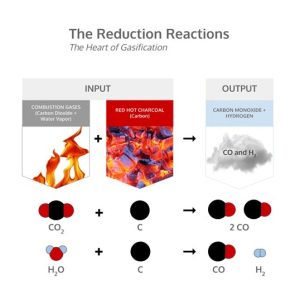
A gasifier is essentially a chemical reactor in which a series of complex physical and chemical reactions take place. Inside the reactor, biomass undergoes drying, heating, pyrolysis, partial oxidation, and reduction as it moves through different zones.
These processes occur in four main stages:
- Drying of the fuel
- Pyrolysis
- Combustion
- Reduction
Together, these stages convert solid biomass into a usable combustible gas, forming the core mechanism of gasification technology.